
 Email Us: info@lupinepublishers.com
 Call Us: +1 (914) 407-6109
57 West 57th Street, 3rd floor, New York - NY 10019, USA
Call Us: +1 (914) 407-6109
57 West 57th Street, 3rd floor, New York - NY 10019, USA


Lupine Publishers Group
Lupine Publishers
ISSN: 2690-5752
Opinion Article(ISSN: 2690-5752) 
Insights Into an Ancient Lefkas (SW Greece) Community: Archaeological, Anthropological, and Palaeopathological Findings from Tomb 43, Aravanis Plot, North Cemetery Volume 9 - Issue 1
Received:January 18, 2024; Published: January 29, 2024
Corresponding author:George Iliopoulos, Department of Geology, University of Patras, Greece.
DOI: 10.32474/JAAS.2024.09.000302
 Abstract
 PDF
PDFAbstract
The ancient city of Lefkas was a powerful center of SW Greece during the classical times. Excavations conducted in the North cemetery of the ancient city exhumed an interesting burial, named Tomb 43, which dates to the 4th – early 3rd century BC. The tomb contained the remains of three individuals accompanied by grave goods. We provide archaeological and palaeopathological data concerning the burial and the three individuals inhumed therein. The results revealed several pathologies, a connection between them on the genetic level and a probable low socio-economic status of the deceased. Furthermore, one of the skulls bared a circular hole, a result of a trepanation operation. The lesion shows clear signs of healing, indicating that the individual survived the process. It is the first time that a successful trepanation is reported from Lefkas as well as from the Classical and Roman period of Western and Central Greece. Tomb 43 provides some interesting insights and adds to the list of archaeological sites of Greece with recorded cases of a successful trepanation.
Keywords:Ancient Greece; Lefkas; Palaeopathology; Trepanation
Introduction
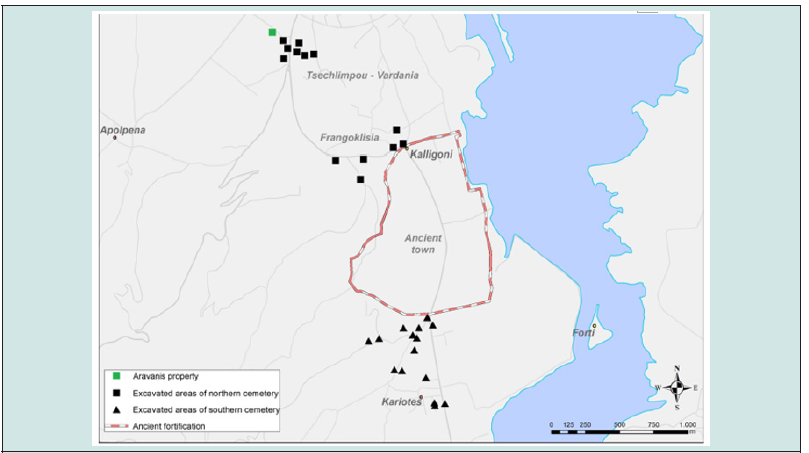
The town of ancient Lefkas due to its strategic location off the western coast of mainland Greece became a powerful fortified city with houses arranged according to the Hippodamian grid plan, an agora, a huge theatre and a busy port [1-5]. The city retained two outside the city walls (Figure 1), the South cemetery, located at the “Kariotes” area, and the North cemetery, found north of the Kalligoni village, and scattered in two main clusters. Several rescue excavations in the two cemeteries have brought to light hundreds of tombs, dating from the archaic to the roman period [2, 6-7]. In 2011 a rescue excavation took place in the property of G. Aravanis, at “Beis” site, “Vardania/Tsechlibou” area [8]. The plot faces the modern Philosophon street, a road that already existed in ancient times, stretching along a patch of the ancient North cemetery. During the excavation, 57 tombs of various types were excavated. Herein, we are focusing on Tomb 43 that was found in the north part of the excavated area and dates to the Classical era. This burial was selected because of the interesting palaeopathologies, including a case of a successful trepanation. Trepanation is one of the oldest surgical procedures ever recorded, being practised from the far East [9] to the far West [10] and also Africa [11], as well as in almost all ancient cultures [12]. One of the oldest recorded cases in Greece comes from Kirra (Central Greece) and dates to the beginning of the Bronze Age [13]. Around 400BC, the father of medicine Hippocrates wrote a book entitled “On Injuries of the Head”, where he describes many details concerning the anatomy of the skull and head trauma.
According to him, trepanation was recommended as a therapy for various head injuries including head fractures. Apart from visible injuries which can also be detected in the osteological remains, trepanation is believed to have been practised also for relieving a patient suffering from mental illness [14]. According to [15] three techniques have been recorded to date: scraping, circular grooving and drilling. The archaeological excavations taking place in Greece all over the years, have resulted in the recovery of several cranial specimens with evident signs of trepanation. [15] mention 18 sites that have yielded 42 trepanation cases on 27 individuals dating from 2000 BC to the post-Byzantine period. Based on the condition of the trepanation scar on the skull, the operation can either be dimmed unsuccessful or successful, which translates to either the person dying or surviving the procedure respectively. The scope of this study is to present a new case of a successful trepanation procedure and to provide a glimpse to some of the interesting pathologies found in this 4th to early 3rd century BC individuals from the north cemetery of the ancient city of Lefkas, SW Greece. This information accompanied further by archaeological data of the burial, provide an insight to this ancient settlement as well.
Figure 1: Map of the ancient town of Lefkas, with the northern and southern cemeteries.
Materials and Methods
In 2016, the study of the osteological material from a number of burials which were exhumed during the previous decade from the South and North cemeteries of ancient Lefkas started, being part of an interdisciplinary project. The study was conducted by the Laboratory of Palaeontology and Stratigraphy of the University of Patras, in collaboration with the Ephorate of Antiquities of Aitoloakarnania and Lefkada [16]. Among the studied burials, Tomb 43 consisted a particularly interesting case of multiple burial, where the well preserved skeletal remains of three individuals were found. A complete list of the skeletal material attributed to the three individuals accompanied also by specimen code is provided as Supplementary Material. Determination of sex was achieved based on characteristics of the skull and pelvis [17]. Metric characteristics of selected long bones were utilised to estimate their stature [18,19]. the epiphyseal closure and the morphological changes of the pubic symphisis and the auricular surface of the ilium depending on the available material for each individual. The palaeopathological study largely follows the standards of [17] and includes observations of various traits on all skeletal elements. For more information see [27]. During the description of dental elements some traits are abbreviated: L indicates the left side of the tooth row, while R indicates the right. I/i: Incisor, C/c: Canine, P/p: Premolar, M/m: Molar. Differentiation between capital and small letters indicates the upper (capital letters) or the lower teeth (small letters).
Results
Tomb 43 was located within a pit carved into the soft natural soil layers. The cist grave was made of local limestone. Its grave cover, preserved in situ, consisted of three small-sized limestone slabs. The external dimensions of the cist were 1.84 (NS) x 0.66m (E-W). During the first stage of the excavation, after the removal of the covering slabs, two burials (Individuals A and B) were visible inside the cist (Figure 2). Individual A was the latest burial in the cist with the skeletal material being well preserved, with a completeness of more than 90% (based on) [28]. The remains belonged to a young male individual of 15 to 20 years old. Due to the young age, the stature was not assessed as the bones were not completely fused. Individual A was buried in an extended supine position with head towards the North. The palaeopathological study revealed the presence of a congenital anomaly in the spine, called border shifting, an anomaly that causes a change in the transition position from one vertebral region to another, and more precisely such changes occurred with two transitions. The first change located between the thoracic and lumbar vertebrae concerns the displacement of a vertebra to a superior position, as the 11th thoracic vertebra showed morphological characters of the 12th thoracic vertebra and the 12th thoracic vertebra showed characters of the 1st lumbar (L1). The second change is located between the 5th lumbar and the sacrum and concerns the displacement of a vertebra to a lower position, as the first sacral vertebra did not show synostosis with the sacrum (Figure 3). Moreover, cortical erosion and porosity along with diffuse was observed as large and small pits were detected in several vertebrae and ribs (Figure 4), in the scapulas and the radiuses. In the endocranial surface, pitting and abnormal macroporosity (with pores penetrating the surface) were recorded (Figure 5). Cribra orbitalia along with porosity in the sphenoid bone were detected, while milder porosity was located in the parietal adjacent to the sutures and locally in the occipital bone. Cribra humeralis and cribra femoralis were prominent too. Concerning dental pathologies, the individual showed many cases of tooth decay and especially in the teeth of the mandible. Mild presence of dental plaque was also identified, again, mainly in the teeth of the mandible. Furthermore, there was clear evidence of enamel hypoplasia in the upper premolars (excluding the left P4), in some lower incisors and in both lower canines as well. In addition, evidence of minor alveolar bone recession was observed beneath the right upper P3. Even though the grave was found sealed and unlooted, the skeletal material of Individual A was significantly disturbed, and the bones were disarticulated, probably due to flooding from rainwater. Intermingled with the above, there were the bones of an earlier burial (Individual B). Despite being a previous burial, the skeletal material was again well preserved, and the completeness reached 90% as well. They belonged to a female adult individual of 50 – 60 years old and of approximately 155 cm in height. The palaeopathological study revealed the presence of a trepanation lesion (Figure 6). The trepanation has a circular crosssection of approximately 9 mm diameter, and it is located centrally on the right parietal bone. Clear signs of healing are observed on the margins. Intense porosity was detected in the frontal bone (including porosity in the orbital cavities), while milder superficial porosity was detected on the parietals (adjacent to the sagittal suture), and the sphenoid bone. Concerning dental pathologies, there were few cases of tooth decay (on RM1, Ri1 and Ri2) and dental plaque (on RM1, RC, Ri2 and Rc). Enamel hypoplasia was also recorded on LC, RI2 and Rc. However, there were many cases of antemortem tooth loss. More specifically, antemortem loss of the RP3 with partial to almost complete remodelling of the socket was observed and possibly of the RM2 as well. Furthermore, most of the lower dentition was lost prior to the individual’s death as all lower molars as well as both fourth premolars were missing, and the sockets were completely remodelled. The Lp3 was missing as well, but the socket had not been fully remodelled yet. Moreover, Individual B developed osteoarthritis in the left and right shoulder and hip joints, as well as in the spine, while partial ossification of the ligamentum flavum was observed in the thoracic vertebrae group. On the iliac tuberosity of the pelvis, an osteophyte was detected, which was enough developed to create a contact surface with the sacrum. Periostosis was also detected on the diaphysis of both tibias and the right fibula. Similarly to Individual A, a congenital anomaly in the spine was detected once again, in the transition from the thoracic to the lumbar vertebrae. As such, the 11th thoracic vertebra showed morphological characters of the 12th thoracic and the 12th thoracic showed characters of the 1st lumbar (displacement towards the skull, in a superior position). In addition, there were indications that the first coccygeal vertebra presented synostosis with the sacrum, however the poor preservation of the bones provides uncertainty. A third skull was found in the tomb. During the second stage of the excavation, more bones of this skeleton were found scattered further north. This skeletal material belonged to a third individual (Individual C) and which was found at least 20 cm deeper than the other two, hence we can assume that this was the first deceased to be buried in the tomb. Furthermore, the preservation condition is worse than the previously described individuals, while completeness reaching only ~43%. Individual C was a female adult of 35 – 40 years old and of approximately 150 cm height. The individual showed intense porosity in the orbital cavities (cribra orbitalia – Figure 7), as well as superficial porosity in part of the right parietal bone close to the sagittal suture and on the inner surface of the occipital. The skeletal remains of the three individuals are shown in Figure 8. Right outside of the grave, near its south-west corner, a broken terracotta oil lamp was found, with the handle and part of the back upper wall missing (Figure 9). We presume that initially the lamp was a grave good, but it was discarded during a reopening of the tomb for a new funeral. The lamp is discoid with a ring around the filling hole and a round elongated nozzle, flat on top. The artefact is made of a light yellowish fine-grained clay. The dull black glaze has almost completely flaked away, even though some small patches are still visible on the rim and the base. This type of lamp is dated to the end of the 4th– early 3rd c. BC (Andreou 1994, [29] 200, table 143a; Pliakou 2009, 194) [30]. Inside the cist, in the south-west part, near the skull of individual B a globular lekythos was found (Figure 10). The vase is made of a yellowish fine-grained local clay and its plain surface was left uncoated and unburnished. It is definitely a production of a Lefkadian workshop and can be dated back to the first decades of the 3rd c. BC [29,30].
Figure 2: The interior of cist Tomb 43.
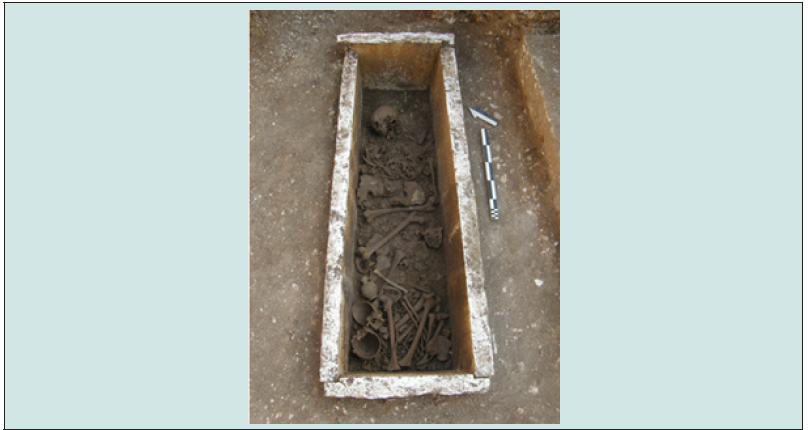
Figure 3: The first sacral vertebra is not being ossified with the lower fourth sacral vertebrae, as observed in Individual A. Antero-inferior view.
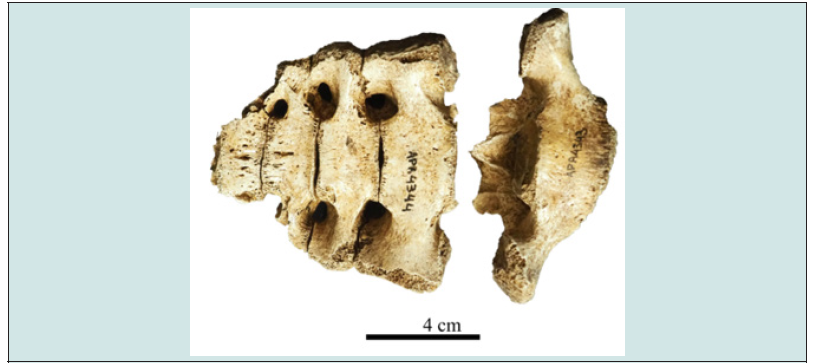
Figure 4: Diffuse porosity along the shaft of the rib, as observed in Individual A.

Figure 5: Porosity in the endocranial surface, as observed in Individual A. Inferior view.
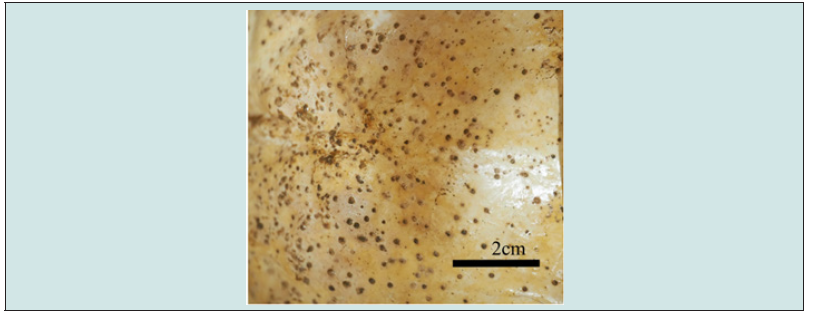
Figure 6: The skull of Individual B from Tomb 43. The arrow indicates the trepanation lesion. Notice the margin of the hole which shows signs of healing, indicating that the person survived the procedure.
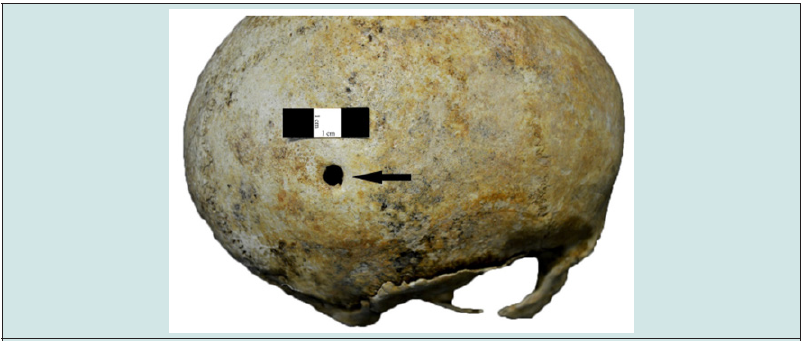
Figure 7: Cribra orbitalia, as observed in Individual C.
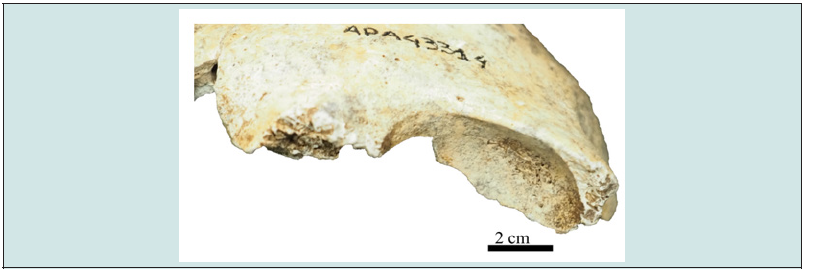
Figure 8: The skeletal remains of Individual A (a), Individual B (b) and Individual C (c) of Tomb 43, in anatomical position.
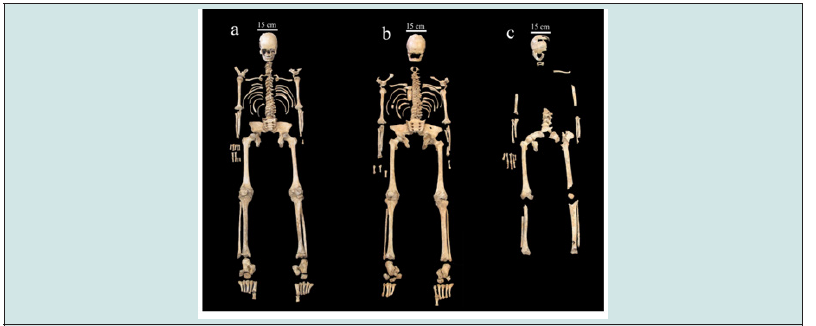
Figure 9: Terracotta lamp, found outside Tomb 43.

Figure 10: Globular lekythos, found inside the cist of Tomb 43.

Discussion
Tomb 43 provided some interesting anthropological and palaeopathological information. The enamel hypoplasia that was detected in some teeth of Individuals A and B, shows that during development, they were likely experiencing conditions of metabolic stress, such as malnutrition, or even a combination of such conditions, with the impact of infectious diseases and poor hygiene [31]. Hypoplasia in different kinds of teeth indicates that they were affected during different developmental stages [32], thus this was not an isolated incident, but rather a frequent phenomenon during childhood. The poor dental hygiene mentioned earlier could also be linked to the high amount of tooth decay. However, tooth decay is also directly related to the consumption of carbohydrates and therefore indicates that the individuals may have had rather low access to protein resources, such as meat, which prevents the formation of dental caries [33]. A diet mainly consisting of carbohydrates may also indicate a poor socio-economic status, which is further indicated by the absence of high-valued grave goods accompanying their burials. All three individuals buried in Tomb 43 showed cranial porosity. The distribution of porosity in the cranial vault was usually symmetrical, manifested mainly adjacent to the sutures and was combined with porosity in the orbital cavities (cribra orbitalia). This type of distribution is a common indicator of porotic hyperostosis. This condition is associated with a number of diseases, most widely referred to as anemia, which can be a result of genetics, malnutrition or parasite infections [34] and more commonly of iron deficiency [35-37]. The characteristic hyperossification of the bone was not visible macroscopically in the case of the two adult individuals (Individual B and Individual C). However, this could be indicative of a mild action during childhood and subsequent healing in adulthood [35,38]. In addition, the porosity that appeared in the sphenoid bone of Individual B could be associated with scurvy which can also result in porotic hyperostosis [37]. Concerning the younger individual (Individual A), similar bone alterations as the ones detected in his vertebrae, ribs and scapulas (having the form of cortical erosion and widespread porosity and pitting) have been described in cases of thalassemia from [39,40]. Extensive porosity in long bones, such as in the diaphysis of his radiuses, has also been reported in a case of thalassemia in an 8-year-old boy from modern Thailand [41] [37]. Cribra femoralis and cribra humeralis, along with cribra orbitalia (cribrous syndrome) [42], have been related with anemia and have been reported by several authors [43-46]. However, unlike the cranial lesions, cribra femoralis and cribra humeralis have not been clinically proven to have a clear association with anemia or any other deficiency [47]. The abnormal diffuse porosity and pitting (exceeding 1mm in size, while pores penetrating the surface) detected in the endocranial surface of Individual A, has been considered as indicative of subadult scurvy [48]. In addition, the irregular porosity found in his scapulas and radiuses as well as the intense porosity detected in the sphenoid bone, have been also reported in subadult scurvy cases [37] [48]. The cranial porosity detected in all three individuals along with the post-cranial porosity, pitting and lesions found in the bones of the youngest individual (Individual A) could be indicative of more than one disorder. Hence, it would be preferable to use the term “anaemic condition” to describe these bone alterations rather than attributing them to a specific disease. Individual B was the oldest of the three individuals of the studied tomb and it was the only one who showed advanced stages of osteoarthritis. Osteoarthritis is considered a condition which is usually age-related and it is a result of continuous engineering joint loading during a person’s lifetime [49-50,34]. In addition to age, it is also associated with another important factor, which is the degree of physical activity [50], [34]. Considering the estimated age of death and most likely the poor socio-economic status of individual B, both of the above-mentioned factors could explain the recorded advanced osteoarthritis stages. Individuals A and B presented the same congenital anomaly regarding the transition from the thoracic to the lumbar vertebrae group. It is unlikely that this anomaly would impose difficulties on the individual’s physical activities, however it shows that Individuals A and B were connected to genetic level; hence being relatives. Tomb 43, therefore, may have been a family tomb, as the practice of multi-burials was fairly common in Lefkas, usually containing two and up to four individuals [51]. The most striking find during the study of the osteological material was the trepanation of individual B’s skull. The circular shape of the lesion and its dimensions indicate that the trepanation technique was drilling. Globally, the majority of such operations were conducted in order to treat violent head traumas resulting from warfare [52]. Therefore, there is a large bias towards young adult males in many parts around the world [53-56]. In the case of Individual B however, this is highly unlikely, since the remains belong to an elderly (for that era) woman, while there is also no evidence of any cranial trauma either. On the contrary, it is more likely that the operation aimed to relieve the patient from some other pathology. In his work, Hippocrates mentions two tools that were used for such a delicate operation: The trypanon and the prion. However, as the trepanation lesion of Individual B’s skull is fully perforated, it is not possible to determine the kind of drill that was used, since both tools result in an identical hole [57]. To date, 18 sites that have yielded trepanation cases in Greece have been reported in the literature [15]. The trepanation case described herein adds to this list and it is the first one described from the island of Lefkas. Also, it is the first trepanation case that has been reported from the Classical and Hellenistic period of central, southern, and western Greece. Only one site from these periods has been reported from Northern Greece (Akanthos) and one from Chios Island [15]. Thus, a more holistic view concerning such practices in Classical-era Greece is provided. It is worth mentioning that one more trepanation case (cutting) has been reported from the Classical cemetery of Nafpaktos in Central- West Greece on the North coast of the Gulf of Corinth [27]. Despite the relatively high survival rate of trepanations in Greece (62.9% [15], it is still remarkable that Individual B survived the procedure and shows clear signs of healing [58].
Conclusions
Tomb 43 contained three individuals. Individual A, which was the primary burial, was a sub-adult male, while the remains of Individual B belong to a mature adult female. Both skeletons were in a good level of preservation and completeness. On the contrary, Individual C’s skeleton was in a rather bad condition of preservation and belonged to an adult female. This was the first and older burial in the tomb. Notably, Individuals A and B share the same congenital anomaly in the morphology of the lower spine vertebrae, indicating that they were connected to the genetic level. The palaeopathological study revealed further a circular trepanation wound of 9 mm on the skull of Individual B, showing clear signs of healing. Based on the burial goods accompanying the tomb and the pathologies that were identified, it is more likely that the three individuals belonged to a low socio-economic status.
Conflict of Interest Statement
The authors declare none.
Funding
No funding was received for conducting this study.
Data Availability Statement
The data that support the findings of this study are available from the corresponding author, upon reasonable request.
References
- Rontogiannis P G (1988) Οι πρωτεύουσες της Λευκάδας, Επετηρίδα Λευκαδικών Μελετών, vol. VII, Αthens, 37-309.
- Andreou, Ι (1998) Πολεοδομικά της Αρχαίας Λευκάδας, ΑDelt 53, A Μeletes, Athens 147-186.
- Fiedler, M. 2009. H αρχαία Λευκάδα και τα σπίτια της, Αrchaeology and Arts 112(1): 38-46.
- Bonelou Ε (2020) Ιστορία και Νομισματοκοπία της Λευκάδας (PhD Thesis), University of Ioannina: Ιoannina.
- Vikatou O, Staikou V, Giza B (2022) in press. “Εντός και εκτός των τειχών. Συστηματικές και σωστικές ανασκαφές στην αρχαία πόλη της Λευκάδας” in Πρακτικά Γ ́ Συνεδρίου για Το Αρχαιολογικό Έργο στη Βορειοδυτική Ελλάδα και τα Νησιά του Ιονίου, Ιωάννινα 19-22.
- Douzougli, A. 2001. Παρατηρήσεις στα νεκροταφεία της αρχαίας Λευκάδας, in Πρακτικά Δ’ Συμποσίου Εταιρείας Λευκαδικών Μελετών, Οι πρωτεύουσες της Λευκάδας, Αρχαία Λευκάδα – Νήρικος - Κάστρο Αγίας Μαύρας - Αμαξική, Athens 45-84.
- Staikou V (2016) Νεώτερες ανασκαφικές έρευνες στα νεκροταφεία της αρχαίας Λευκάδας, in Ch. Papadatou-Giannopoulou (ed.), ΝΗΡΙΚΟΣ-ΛΕΥΚΑΣ-ΚΑΣΤΡΟ. Η μακροβιότερη πρωτεύουσα της Λευκάδας, August 2010, Conference Proceedings, Lefkada, 169-195.
- Staikou V (2019) Λευκάδα, οδός Φιλοσόφων, οικ. Γ. Αραβανή, ΑDelt 70 (2011), B1’ Chronica, Athens, 620-621.
- Hobert L, Binello E (2017) Trepanation in Ancient China. World Neurosurgery. 101(1): 451-456.
- Verano J W, Asencios B I, Kushner D, Valle M L, Titelbaum A R, et al. (2016) Holes in the Head: The Art and Archaeology of Trepanation in Ancient Peru. Studies in Pre-Columbian Art and Archaeology 38: 322.
- Rawlings CE, Rossitch E (1994) The history of trephination in Africa with a discussion of its current status and continuing practice. Surgical Neurology 41(6): 507-513.
- González Darder J M (2017) Cranial trepanation in primitive cultures. Neurocirugía (English Edition). 28(1): 28-40.
- Papagrigorakis M J, Toulas P, Tsilivakos M G, Kousoulis A A, Skorda D, et al. (2014) Neurosurgery During the Bronze Age: A Skull Trepanation in 1900 BC Greece. World Neurosurgery 81(2): 431-435.
- Tsoucalas G, Kousoulis A , Mariolis Sapsakos T, Sgantzos M (2017) Trepanation Practices in Asclepieia: Systematizing a Neurosurgical Innovation. World Neurosurgery 103(1): 501-503.
- Aidonis A, Papavramidou N, Moraitis K, Papageorgopoulou C (2021) Trepanations in the ancient Greek colony of Akanthos: Skull surgery in the light of Hippocratic medicine. International Journal of Paleopathology 35(1): 8-21.
- Sianis P D, Tsitsou E, Iliopoulos G Staikou V () in press. Ερευνητικό πρόγραμμα μελέτης οστεολογικού υλικού από τα νεκροταφεία της αρχαίας Λευκάδας. Προκαταρκτικά Πορίσματα. ADelt 72-73 , Meletes, Αthens.
- Buikstra JE, Ubelaker DH (1994) Standards for Data Collection from Human Skeletal Remains. Research Seminar Series 44, Arkansas Archaeological Survey. Fayetteville, AR.
- Steele D G, McKern TW (1969) A method for assessment of maximum long bone length and living stature from fragmentary long bones. Am J Phys Anthropol 31(2): 215-227.
- Ruff CB, Holt BM, Niskanen M, Sladék V, Berner M, et al. 2012. Stature and body mass estimation from skeletal remains in the European Holocene. Am J Phys Anthropol 148(4): 601-617.
- McKern T W, Stewart T D (1957) Skeletal age changes in young American males. Natick, Massachusetts: Quartermaster Research and Development Command Technical Report EP-45
- Redfield A (1970) A new aid to aging immature skeletons: development of the occipital bone. Am J Phys Anthropol 33(2): 207-220.
- Lovejoy CO (1985) Dental wear in the Libben population: its functional pattern and role in the determination of adult skeletal age at death. Am J Phys Anthropol 68(1): 47-56.
- Krogman W M, İşcan M Y (1986) The Human Skeleton in Forensic a Medicine (2nd Ed.). Springfield, Illinois: C C Thomas.
- Ubelaker D H (1989) Human Skeletal Remains, Excavation, Analysis, Interpretation. Second Edition. Washington D.C.: Taraxacum.
- Ubelaker D H (1989) Positive identification of American Indian skeletal remains from radiograph comparison. Journal of Forensic Sciences 35(2): 466-472.
- Brooks S, Suchey J (1990) Skeletal Age Determination Based on the Os Pubis: A Comparison of the Acsádi-Nemeskéri and Suchey-Brooks Methods. Human Evolution 5(1): 227-238.
- Tsitsou E (2017) Palaeopathological study of human skeletal material of ancient populations from burials from the North cemetery of Lefkas and Nafpaktos [master’s Thesis]. University of Patras: Patras.
- Rowbotham S K, Blau S, Hislop Jambrich J (2017) Recording skeletal completeness: A standardised approach. Forensic Sci Int. 275(1): 117-123.
- Αndreou I (1994) Σύνολα ελληνιστικής κεραμικής από τα νεκροταφεία της αρχαίας Λευκάδας, in Kotsou, E. (ed.), 3rd Scientific Meeting on Hellenistic Pottery, Αthens 196-204.
- Pliakou G (2009) Ελληνιστική κεραμική από τα νεκροταφεία της αρχαίας Λευκάδας, in Theophilopoulou V. (ed.), Ελληνιστική κεραμική από την αρχαία Ήπειρο, την Αιτωλοακαρνανία και τα Ιόνια Νησιά, , Αthens pp. 191-210.
- Goodman A Rose J C (1991) Dental enamel hypoplasias as indicators of nutritional status. In: Advances in Dental Anthropology. Missouri: Wiley-Liss p. 279-293.
- Jälevik B, Norén JG (2000) Enamel hypo mineralization of permanent first molars: a morphological study and survey of possible aetiological factors. Int J Paediatr Dent. 10(4): 278-289.
- Michael D E, Manolis S (2014) Using dental caries as a nutritional indicator, in order to explore potential dietary differences between sexes in an ancient Greek population. Mediterranean Archaeology and Archaeometry 14(2): 221-232.
- Larsen CS (2015) Bioarchaeology: Interpreting Behavior from the Human Skeleton. 2nd ed. Cambridge: Cambridge University Press.
- Stuart Macadam P (1985) Porotic hyperostosis: representative of a childhood condition. Am J Phys Anthropol 66(4): 391-398.
- Stuart Macadam P (1998) Iron deficiency anemia: exploring the difference. In: Sex and Gender in Paleopathological Perspective. Cambridge: Cambridge University Press.
- Ortner D J (2003) Identification of Pathological Conditions in Human Skeletal Remains. 2nd ed. Cambridge: Academic Press.
- Suby J (2014) Porotic hyperostosis and cribra orbitalia in human remains from Southern Patagonia. Anthropological Science 122(2): 69-79.
- Moseley J E (1974) Skeletal changes in the anemias. Seminars in Roentgenology 9 (3): 169-184.
- Lagia A, Eliopoulos C, Manolis S (2006) Thalassemia: macroscopic and radiological study of a case. International Journal of Osteoarchaeology 17 (3): 269-285.
- Aufderheide A C, Rodriguez Martín C (1998) The Cambridge Encyclopedia of Human Paleopathology. Cambridge University Press.
- Miquel Feucht M, Polo Cerdá M, Villalaín Blanco J, 1999b El síndrome cribroso: cribra femoral vs cribra orbitalia. In: Sánchez, J. (Ed.), Sistematización metodológica en Paleopathología Actas del V Congreso Nacional de Paleopatologí Asociación Española de Paleopatología, Alcalá la Real pp. 221-237.
- Baxarias J (2002) La Enfermedad en la Hispania Romana: estudio de una necrópolis tarraconense. Libros Pórtico, Zaragoza.
- Djuric M, Milovanovic P, Janovic A, Draskovic M, Djukic K, et al. (2008) Porotic lesions in immature skeletons from Stara Torina, late medieval Serbia. International Journal of Osteoarchaeology 18(5): 458-475.
- Mendiela S, Rissech C, Haber M, Pujol Bayona A, Lomba J, Turbón D (2014) Childhood growth and health in Camino del Molino (Caravaca de la Cruz, Murcia, Spain) a collective burial of the III Millennium cal. BC. A preliminary approach. In: Adés, Ao (Ed.), Estudis D’evolució Etologia, pp. 101-106.
- Paredes J, Ferreira M T, Wasterlain S N (2015) Growth problems in a skeletal sample of children abandoned at Santa Casa da Misericórdia, Faro, Portugal (16th–19th centuries). Anthropological Science 123(3): 49-59.
- Lewis M E (2017) Paleopathology of Children. Elsevier.
- Brickley M, Ives R (2008) The Bioarchaeology of Metabolic Bone Disease. Academic Press, Oxford.
- Rogers J, Waldron T (1995) A field guide to joint disease in archaeology. New York: John Wiley & Sons.
- Jurmain R (1999) Stories from the Skeleton: Behavioral Reconstruction in Human Osteology. London: Routledge.
- Sianis P D (2017) Palaeoanthropological study of osteological material from Classical period burials from Lefkas [master’s Thesis]. Patras: University of Patras.
- Andrushko VA, Verano JW (2008) Prehistoric trepanation in the Cuzco region of Peru: a view into an ancient Andean practice. Am J Phys Anthropol. 137(1):4-13.
- Silva A M (2003) Trepanation in the Portuguese Late Neolithic, Chalcolithic and Early Bronze Age Periods. In: R. Arnott, S. Finger & C. U. M. Smith (eds.), Trepanation. History-Discovery-Theory. Lisse: Swets & Zeitlinger Publishers pp.175-188
- Roberts C A, McKinley J (2003) A review of trepanations in British antiquity focusing on funerary context to explain their occurrence. In: R. Arnott, S. Finger & C. U. M. Smith (eds.), Trepanation. History—Discovery-Theory. Lisse: Swets and Zeitlinger pp. 55-78.
- Erdal YS, Erdal ÖD (2011) A review of trepanations in Anatolia with new cases. International Journal of Osteoarchaeology 21(5): 505-534.
- Kurin DS (2013) Trepanation in South-Central Peru during the early late intermediate period (ca. AD 1000–1250). American Journal of Physical Anthropology 152(4): 484-494.
- Fabbri PF, Lonoce N, Masieri M, Caramella D, Valentino M, et al. (2012) Partial cranial trephination by means of Hippocrates’ trypanon from 5th century BC Himera (Sicily, Italy). International Journal of Osteoarchaeology 22(2): 194-200.
- Miquel Feucht M, Polo Cerdá M, Villalaín Blanco J (1999) a Anthropological and paleopathological studies of a mass execution during the War of Independence in Valencia, Spain (1808-1812). Journal of Paleopathology 11 (3): 15-23.
Editorial Manager:
Email:
archaeology@lupinepublishers.com
archaeology@lupinepublisher.com

-

Mark E Smith
Bio chemistry
University of Texas Medical Branch, USA -

Lawrence A Presley
Department of Criminal Justice
Liberty University, USA -

Thomas W Miller
Department of Psychiatry
University of Kentucky, USA -

Gjumrakch Aliev
Department of Medicine
Gally International Biomedical Research & Consulting LLC, USA -

Christopher Bryant
Department of Urbanisation and Agricultural
Montreal university, USA -

Robert William Frare
Oral & Maxillofacial Pathology
New York University, USA -

Rudolph Modesto Navari
Gastroenterology and Hepatology
University of Alabama, UK -
Andrew Hague
Department of Medicine
Universities of Bradford, UK -

George Gregory Buttigieg
Maltese College of Obstetrics and Gynaecology, Europe -

Chen-Hsiung Yeh
Oncology
Circulogene Theranostics, England -
.png)
Emilio Bucio-Carrillo
Radiation Chemistry
National University of Mexico, USA -
.jpg)
Casey J Grenier
Analytical Chemistry
Wentworth Institute of Technology, USA -

Hany Atalah
Minimally Invasive Surgery
Mercer University school of Medicine, USA -

Abu-Hussein Muhamad
Pediatric Dentistry
University of Athens , Greece